
2026 Tax Planning: Key Updates and What They Mean for You
Tax laws continue to evolve, and staying ahead of those changes is an important part of building a strong financial strategy. The 2026 tax landscape brings updated brackets, contribution limits, and planning thresholds that can meaningfully impact how individuals and families save, invest, and plan for the future. Understanding these changes early creates opportunities to make more informed, proactive decisions throughout the year.

Anthony Collica
Executive Director of Wealth
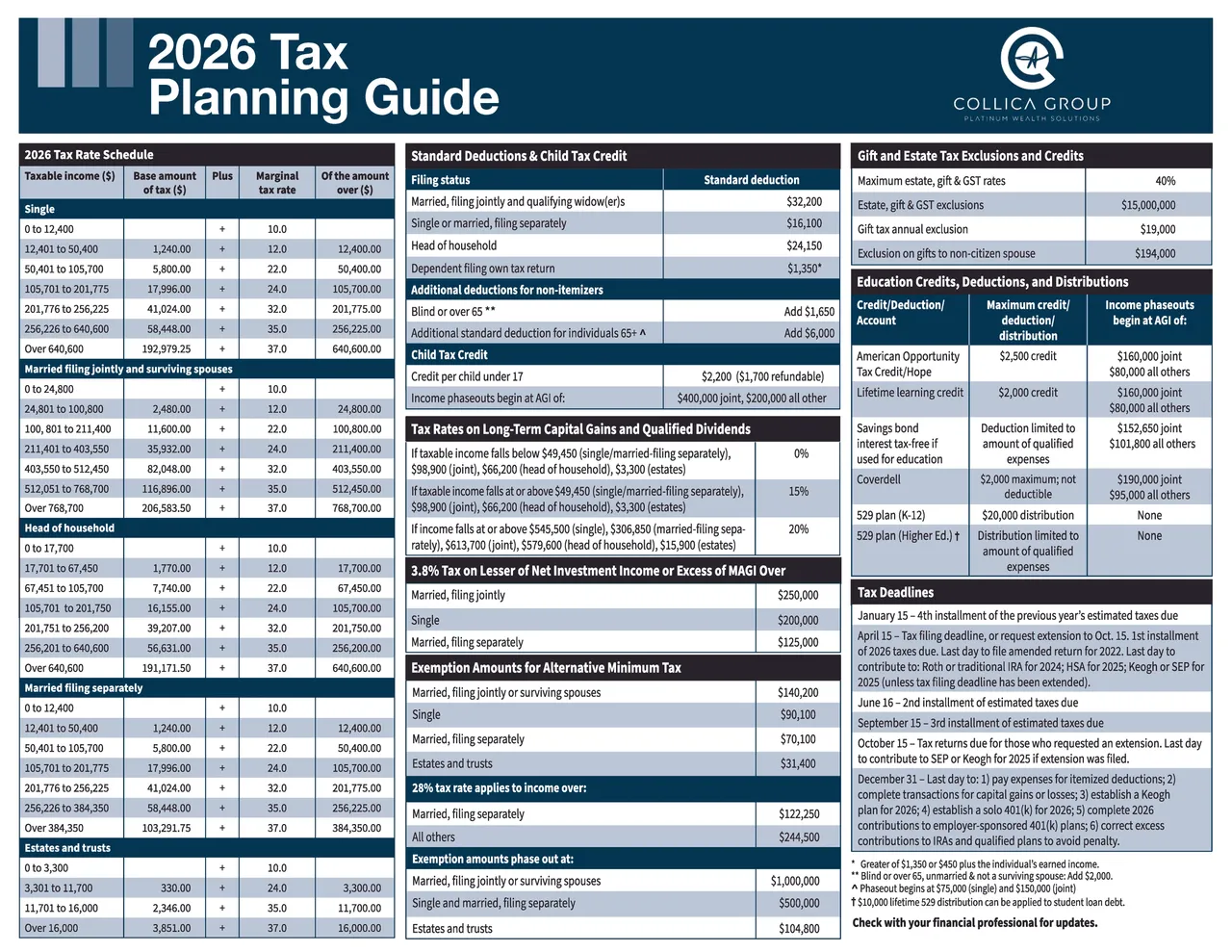
Table of contents
Share
2026 Tax Planning: Key Updates and What They Mean for You
Tax planning is about more than preparing a return — it’s about making informed decisions before the year ends. As tax rules continue to evolve, understanding how updated brackets, deductions, contribution limits, and planning thresholds work together is essential for building an effective long-term strategy.
The 2026 tax landscape presents new opportunities for proactive planning, particularly for high-income households, business owners, and individuals approaching retirement.
Income Tax Brackets and Investment Income
Federal income tax rates remain progressive, with marginal rates ranging from 10% to 37% depending on income and filing status. Long-term capital gains and qualified dividends continue to receive preferential tax treatment, with lower tax rates applied based on income thresholds.
For investors, the interaction between ordinary income and investment income remains a critical planning consideration. Coordinating portfolio strategy with income timing can help manage overall tax exposure more effectively.
Standard Deductions and Tax Credits
Standard deductions have increased again for 2026, reducing taxable income for many households. Married couples filing jointly, single filers, and heads of household each benefit from higher baseline deductions, which may impact whether itemizing deductions still makes sense.
The Child Tax Credit remains available for qualifying families, though income phaseouts apply at higher income levels. These adjustments reinforce the importance of reviewing deductions and credits annually to ensure planning strategies remain aligned with current rules.
Retirement Contribution Opportunities
Retirement savings limits continue to rise, creating expanded opportunities to save on a tax-advantaged basis. Contribution limits for employer-sponsored retirement plans, including 401(k)s, have increased, with additional catch-up contributions available for individuals over age 50 and enhanced limits for certain age groups approaching retirement.
IRA contribution limits have also increased, allowing savers to further strengthen long-term retirement planning. Thoughtful use of these contribution limits can help reduce current taxable income while building future financial flexibility.
Social Security and Medicare Considerations
As retirement approaches, understanding how income affects Social Security taxation and Medicare premiums becomes increasingly important. A portion of Social Security benefits may be taxable depending on total income, and higher earners may be subject to increased Medicare premiums due to income-related adjustments.
Coordinating withdrawals from retirement accounts, taxable investments, and Social Security benefits can help manage both taxes and healthcare costs over time.
Estate and Gift Planning Thresholds
Estate and gift tax exemptions remain historically high, offering significant planning flexibility for families focused on wealth transfer and legacy planning. Annual gifting allowances allow individuals to transfer wealth gradually, while lifetime exemptions provide opportunities for more substantial planning strategies.
While current limits are favorable, future legislative changes remain a possibility, making proactive estate planning an important part of a comprehensive financial strategy.
Why Proactive Tax Planning Matters
Tax planning works best when it’s integrated into your broader financial picture. Retirement savings, investment strategy, income timing, and estate planning all interact with the tax code in meaningful ways. Small decisions made today can have a significant impact over time.
A proactive, coordinated approach allows you to adapt as rules change and life evolves — providing clarity, flexibility, and confidence in your financial decisions.